
Human Skills: Easy to Recognize, Hard to Measure
Human Skills: Easy to Recognize, Hard to Measure
Here’s what happened when Spring 2026 Open Mindset Project students put those skills into practice with experienced professionals.
You can teach someone how to use a spreadsheet, analyze data or operate a new piece of software. But what happens when the person sitting across the table disagrees with you? When a client sees a problem differently? When a new team requires you to listen, adapt and earn trust before you can get anything done?
That is where human skills come in.
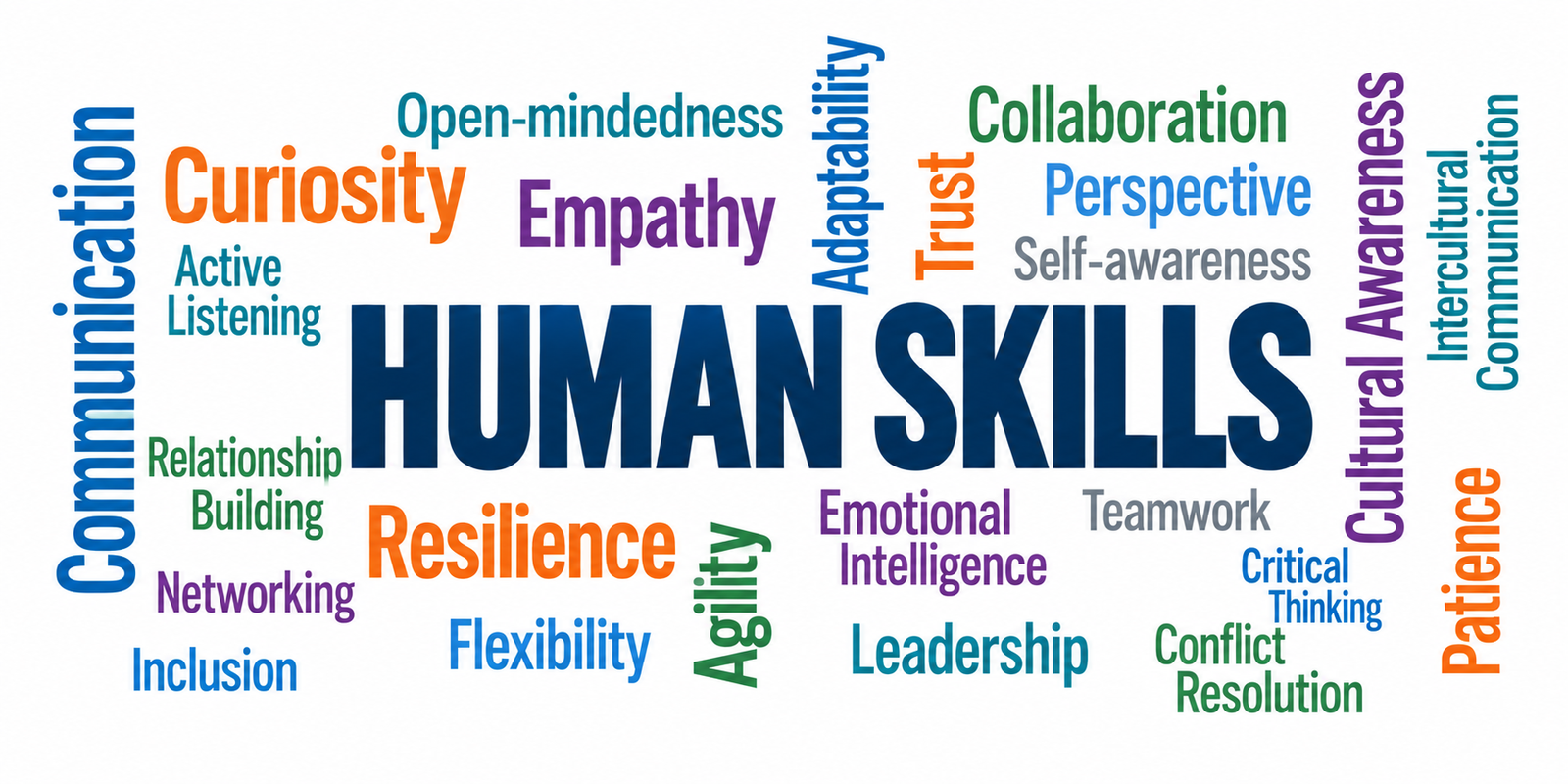
Often called “soft skills,” human skills are the abilities that help us work effectively with other people and navigate situations that don’t come with a script. Communication, adaptability, empathy, self-awareness, collaboration and relationship-building are examples. They can be harder to measure than technical skills, and they’re harder to demonstrate on a résumé, but employers identify them as core workforce skills.
The World Economic Forum’s Future of Jobs Report 2025 found that employers consider resilience, flexibility and agility, leadership and social influence, empathy and active listening among their core workforce skills. The report also points to the need for workers who can balance technical expertise with interpersonal abilities.
The Open Mindset Project’s Spring 2026 cohort offers a close-up look at what happens when students have a chance to put human skills to work–not just learn about them but use them in conversations that connect to real situations.
Thirty-five students began the cohort and 24 completed all four modules. Response rates stayed high throughout, ranging from 96% to 100% of the students assigned to each module. A consistent theme emerged in their responses: several students were already familiar with these concepts. What the program gave them was an opportunity to develop them through conversations with a mentor–their Global Guru–and apply them to situations beyond the classroom.
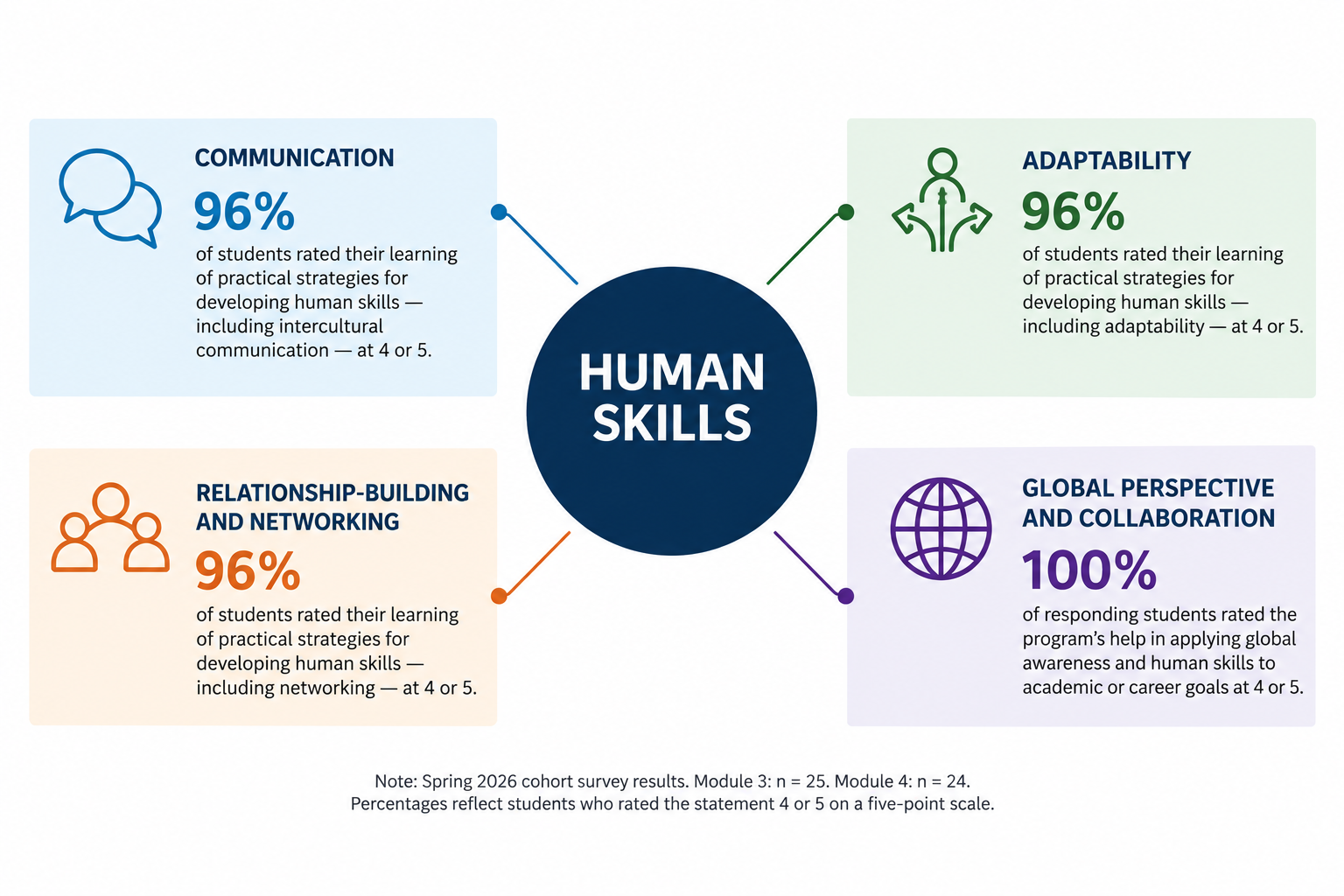
By Module 3, 96% of students rated their learning of practical strategies for developing human skills, including intercultural communication, adaptability, networking and global teamwork, at 4 or 5 on a five-point scale. By Module 4, every responding student rated the program’s help in applying global awareness and human skills to academic or career goals at 4 or 5.
But the numbers only tell part of the story. The students’ comments reveal what that practice looked like.
One student described learning “how to use my weakness to improve daily interactions.” Another said conversations with their mentor helped build confidence in professional conversations and effective networking. A third said their mentor’s advice about being “open to conflict” and comfortable starting over when something isn’t working changed the way they think about situations.
What those comments reveal is how human skills show up in everyday interactions. It is not a lecture about “communication.” It is figuring out how to communicate when the conversation is uncomfortable.
Those experiences were not limited to the students’ perspective. Global Gurus described conversations that gave students opportunities to bring real questions, challenges and different points of view to the table.
Global Guru Meg Greenhouse saw that connection firsthand. She said the program gave her mentees an opportunity to “bring real topics forward” from what they were studying or facing. Global Guru Tracey Gibbons described a student navigating differing perspectives while studying in Europe—an experience the student found illuminating as she considered events from outside the United States.
The same skills matter in everyday professional situations. Imagine you’re leading a project and a colleague strongly disagrees with your approach. Your technical expertise may help you make the case, but human skills come into play when you listen to the other perspective, work through the disagreement and decide whether your approach needs to change. Knowing how to navigate that conversation can be just as important as knowing the technical details of the project.
Those conversations can build something a classroom or résumé cannot fully capture: the ability to pause, consider another perspective and respond thoughtfully.
Human skills are not an alternative to hard skills. They are what help people put hard skills to work—with colleagues, customers, leaders, clients and communities.
The Spring 2026 Open Mindset students did not simply learn about human skills. They practiced them in conversations, reflection, disagreement, networking and decisions about their futures.
Those are skills worth carrying into any workplace.
Next in the series: What Mentors Get Out of Mentoring
Students weren’t the only ones who benefited from the program. Our next story looks at what Global Gurus took away from their mentoring experience.


.webp)
.webp)
.webp)